
Generating Feminist Responses to Crises


Crises no longer come in isolation. Disasters, caregiving burdens, economic inequality, migration, climate crisis, digital violence, shrinking civic space… They all intersect, amplify each other, and make already existing inequalities more visible.
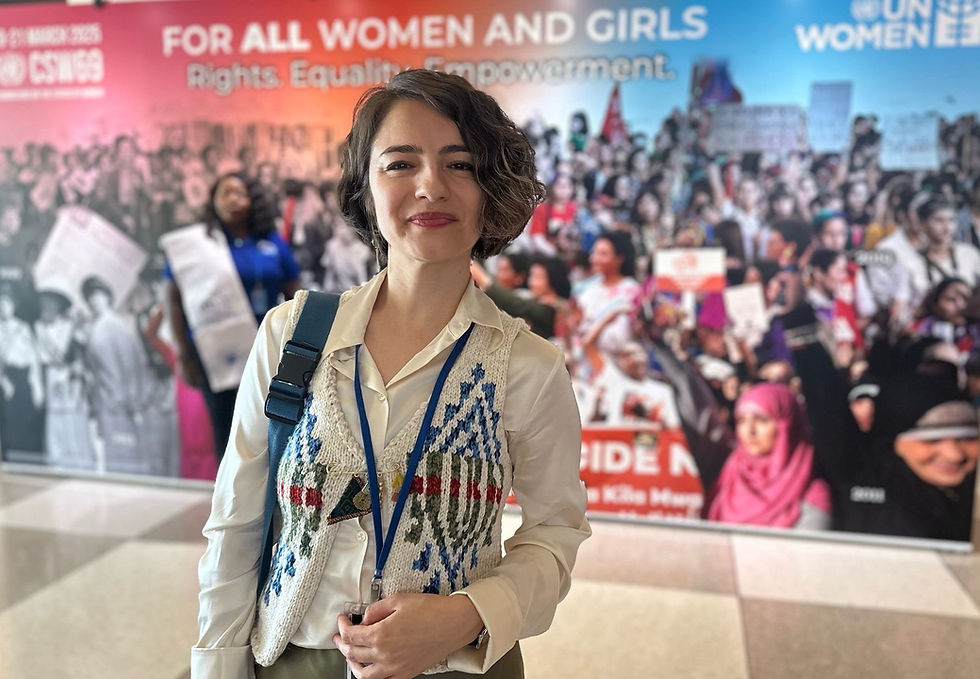
In our "Generating Feminist Responses to Crises" workshop held in Istanbul as ÇemberDE, we attempted to look at this complex situation from a feminist perspective. The workshop brought together the global feminist discussions that ÇemberDE followed at CSW with the experience accumulated in the field after the February 6th earthquakes. Our aim was not to present a report or provide ready-made answers; it was to think together, ask questions, and discuss how we can act in concrete crisis situations.
Women are not just a “vulnerable group”
Throughout the meeting, we challenged the notion that women are merely a “vulnerable group” in crises. Because women are not only affected by crises; they are also actors who carry information, build solidarity, bear caregiving burdens, create local solutions, and often ensure the survival of the community.
Therefore, we do not view disaster and crisis management as merely a matter of technical preparation, logistics, or aid delivery. Security, care, privacy, access, local information, and participation in decision-making processes are just as important.

Feminist knowledge born from the field
In the workshop, we also shared the story of the "Feminist Solidarity and Support Guide in Disasters ." The guide was born from very basic questions we encountered in the field: Who can access help, and who is left out? Where can women turn when the risk of violence increases? Who bears the burden of caregiving? What role do local women's organizations play in decision-making?
In the second half of the meeting, we gave the floor to the tables. Participants worked together on different scenarios, ranging from temporary living spaces and aid distribution to caregiving burdens, migrant women's access to services, team burnout, and local government crisis plans.
More accurate questions than ready-made answers.
Although we discussed different issues, the same questions kept coming up: Who remains invisible? Whose voice is absent from decision-making processes? Who bears the burden of care? Who has access to information? How can we act without causing harm?
Perhaps this is where feminist crisis management begins.
It's not about ready-made solutions; it's about asking the right questions, taking local knowledge seriously, prioritizing care and safety, and not just listening to women's experiences but incorporating them into decision-making processes.

Thinking together, acting together.
At ÇemberDE, we see this gathering not as a one-off event, but as a step towards collective thinking and fostering feminist solidarity. Because generating feminist responses to crises means not only mitigating the consequences of the crisis, but also thinking together, learning together, and acting together to transform the inequalities that crises reveal.


Comments